Marlboro Gold Cigarettes Australia: Gold vs Red, Price, Strength [2026 Guide]
Is Marlboro Gold the same as Marlboro Lights, is it stronger or weaker than Red, and how much does it cost in Australia? A definitive 2026 guide using published tar and nicotine data.
- Blog
-
 Williams Hayes
Table of Contents
Marlboro Gold cigarettes are Marlboro’s lower-tar product line in Australia, now sold under the Gold name rather than Marlboro Lights, and available in 20- and 25-pack sizes as well as cartons through supermarkets and online retailers.
This guide is written for adult smokers in Australia who already know the Marlboro brand and want clear, factual information about Gold specifically. It explains how Marlboro Gold differs from Marlboro Red and former Marlboro Lights, including published tar and nicotine figures, common taste descriptions, current Australian pack formats and pricing, practical checks for spotting genuine products, and where to buy Marlboro Gold legally.
For smokers comparing strength, price, and product authenticity, those details matter more than marketing language—especially with branding changes and continuing cigarette price increases in Australia. For current Marlboro Gold pricing and stock, check the Marlboro category at Local Tobacconist AU.

What Are Marlboro Gold Cigarettes? Lights, Marlboro Menthol and Original
Marlboro Gold is a Marlboro product line that was previously sold as Marlboro Lights before regulatory restrictions on “Light” and “Mild” labelling led to the renaming; Marlboro was introduced in 1924 by Philip Morris. The broader brand later evolved, with the Marlboro Man campaign launching in the 1950s, after earlier marketing had used multiple slogans. It is not a menthol cigarette — Marlboro Gold is a standard tobacco product, distinct from Marlboro’s separate menthol lines.
This is worth stating plainly because it’s a common point of confusion: searches for “are Marlboro Golds menthol” are common, and the answer is no. If you’ve seen a listing mention a capsule or a menthol kick alongside the word “Gold,” that’s a different Marlboro product line being marketed near Gold in search results — not Gold itself.
Marlboro Gold uses a standard tobacco blend. If you’re after a menthol option, that’s a different product line entirely, not Gold under another name, and Marlboro also offers Red, Gold, and Silver.
Are Marlboro Gold and Marlboro Lights the Same? (Philip Morris USA)
For practical identification purposes, yes. Marlboro Gold occupies the same position in the product range that Marlboro Lights did before the name change. The renaming happened because Australia and most major tobacco markets restricted descriptors like “Light,” “Mild,” and “low tar” on cigarette packaging — these terms were found to imply a product was less harmful, which regulators determined was misleading. Philip Morris International shifted to colour-based naming instead. Outside the United States, packs are manufactured by Philip Morris.
This is a labelling change, not a confirmed reformulation. Specifications can vary by market, year, production batch, and regional manufacturing or labelling rules, so the precise published figures for any given pack may differ slightly from what they were under the Lights name decades ago — but the basic product positioning is consistent.
Under Australian law, no cigarette pack sold legally today can use “Light,” “Mild,” or “low tar” wording, regardless of brand. This is why Gold — and equivalent colour-based names across other brands — replaced those terms.
For background on Australian tobacco packaging and labelling law, the Australian Government Department of Health and Aged Care maintains current guidance.

Is Marlboro Gold a Strong Cigarette?
Based on published specifications, Marlboro Gold has lower tar and nicotine levels than Marlboro Red, though some market-specific descriptions also note it as Non-FSC and free of fire-safe chemicals. “Strong” here refers to manufacturing specifications, not a measure of health risk. Whether a cigarette feels “smooth,” “mild,” or “harsh” to a given smoker is a subjective sensory response — it’s not a reliable way to judge nicotine content or relative harm. The numbers in the next section are the more useful reference point if you’re trying to understand published strength differences.
What Does Marlboro Gold Taste Like?
Marlboro Gold does not have one universally agreed taste profile. Retailers commonly describe it as “smooth,” “mild,” “clean,” or “balanced,” but these terms reflect sensory perception rather than measurable product specifications.
In user reviews, Marlboro Gold is usually discussed in comparison with Marlboro Red. Some adult users describe Gold as less intense or less harsh, while others find it too light or notice only a small difference. Differences between Marlboro variants typically come down to tobacco blend, filter design, and flavour profile. Comments about sweetness, tobacco scent, smoothness and the finish on the palate also vary between individuals and market-specific versions.
What users commonly report:
- Less intense than Marlboro Red
- A more restrained tobacco scent
- Less perceived harshness
- Differences between country-specific versions
- Mixed opinions, with some describing a classic taste and others saying it does not feel distinctive
My editorial take: after comparing product descriptions and user discussions, the most useful conclusion is not that Marlboro Gold has one definitive taste. It is that users generally discuss it in relation to Marlboro Red, while their descriptions of intensity, harshness and scent vary considerably, and different variants are designed to appeal to different adult smokers. Market-specific versions may also contribute to those differences.
Note: Terms such as “smooth” or “mild” do not indicate nicotine content, tar content or relative safety. Published specifications may help distinguish product versions, but they cannot predict an individual user’s taste experience. If you’re trying to decide whether Gold is meaningfully different from Red, or whether it’s worth switching, taste descriptions can’t answer that question — only published specifications can, and even those don’t tell you anything about relative safety.

Marlboro Gold vs Marlboro Red: Strength, Tar Content and Nicotine
Marlboro Red carries higher published tar (approximately 10–12mg per stick) and nicotine (approximately 0.8–1.1mg) than Marlboro Gold. Gold is the lower-specification reference point between the two — this reflects manufacturing specifications, not a difference in health risk.
Marlboro Red — The Original Specification
Red is the original Marlboro variant, the reference point the rest of the range is measured against. It carries the higher published figures of the two:
What’s actually different about Red:
- Published tar and nicotine: Approximately 10-12mg tar and 0.8-1.1mg nicotine per cigarette — the higher end of the two
- Naming history: Never renamed; it’s been “Red” since before plain packaging regulations existed
- Menthol: No
- Available formats: 20s, 25s, 10 Packets x 20’s carton
Higher published figures don’t mean Red is a “stronger” experience in any way you can verify without lab equipment — they’re manufacturing specifications, not a measure of impact or risk.
Marlboro Gold — The Renamed Lower-Specification Line
Gold occupies the lower-specification position in the range, and carries a naming history that Red doesn’t have:
What’s actually different about Gold:
- Published tar and nicotine: Lower than Red across both figures — exact numbers vary by market and production batch
- Naming history: Renamed from Marlboro Lights after Australia and other markets restricted “Light” and “Mild” labelling
- Menthol: No
- Available formats: 20s, 25s, 10 Packets x 20’s carton
The naming history is the one genuinely interesting difference here — Gold’s lower published numbers reflect the same regulatory shift covered in Section 1, not a separate product development.

Marlboro Gold vs Marlboro Red: Key Difference
The core difference is the published tar and nicotine specification, not the brand identity — both are made by Philip Morris International under the same Marlboro name. Marlboro Gold is generally the choice for smokers who prefer a milder smoking experience, and Marlboro has developed multiple variants to suit different adult-smoker preferences, while Marlboro Red is the usual reference point for full flavour cigarettes.
If you’ve seen other brands suggested as “similar to Marlboro Gold,” the most reliable way to compare is the same approach: check published tar and nicotine figures rather than relying on brand reputation or marketing description, since “similar” claims are usually based on subjective comparison rather than matching specifications.
Side-by-Side Reference
| Specification | Marlboro Red | Marlboro Gold |
| Published tar (reference) | ~10-12mg | Lower than Red — exact figure varies by market and production batch |
| Published nicotine (reference) | ~0.8-1.1mg | Lower than Red — exact figure varies by market and production batch |
| Menthol | No | No |
| Naming origin | Original Marlboro variant | Renamed from Marlboro Lights |
| Pack format | 20s, 25s, 10 Packets x 20’s carton | 20s, 25s, 10 Packets x 20’s carton |
Those differences are usually about blend and smoking profile rather than brand ownership.
Reference figures are based on publicly available product data and vary by market, country, and packaging batch. They’re provided for identification purposes only — a lower published tar or nicotine figure does not mean a product carries less health risk. All cigarettes, regardless of variant, carry serious health risks.
Is Marlboro Gold Stronger Than Red?
No. Based on published specifications, Red is consistently the higher figure of the two for both tar and nicotine. Choosing between them is a personal choice based on what a smoker may prioritize, though both carry the same serious health risks regardless of the published numbers.
If you’re choosing between the two for the first time: the decision comes down to which published specification you’re after, not which one is “better.” If you want the lower tar and nicotine figure, Gold is that option. If you’ve been smoking Red and switch to Gold expecting an identical experience at a lower number, be aware the published specifications are genuinely different — it’s not the same product with smaller numbers printed on it.
How Much Is Marlboro Gold in Australia? Pack Sizes and Carton Pricing
A standard Marlboro Gold pack contains 20 cigarettes; some retailers also stock a 25-pack format. A full carton (10 Packets x 20’s) contains 200 cigarettes. Pricing varies by retailer, pack size, and format — single packs are typically sold through supermarkets and convenience stores, while cartons are more commonly available through licensed online retailers.

| Format | Cigarettes Included | Typically Available From |
| Single pack (20’s) | 20 | Supermarkets (Coles, Woolworths), convenience stores, licensed online retailers |
| Single pack (25’s) | 25 | Select supermarkets, licensed online retailers |
| 10 Packets x 20’s (carton) | 200 | Licensed online retailers, some physical tobacconists |
Here’s the actual number most people are looking for: a single 20-pack of Marlboro Gold at major Australian supermarkets is currently sitting around $56–$62, depending on the store and location. That’s not a typo, and it’s not a one-off spike — Australian tobacco excise has increased every year for the past eight years, with the most recent rises running at roughly 12.5% annually. For comparison, a 20-pack of premium cigarettes was selling for around $30–$34 as recently as 2020. The price has effectively doubled in five years.
Single Pack (20's)
| What | Detail |
| Quantity | 20 cigarettes |
| Typical price (2026) | ~$56–$62 at major supermarkets |
| Where | Coles, Woolworths, convenience stores |
| Trend | Up roughly 12.5% per year, driven by excise indexation |
Why the price keeps moving: this isn’t retailer markup — it’s the federal tobacco excise, which is indexed and rises automatically. Coles and Woolworths are selling at close to the same price as each other because the excise, not the retailer, is the largest part of the cost.
Single Pack (25's)
A 25-pack costs more in total than a 20-pack, but check the price per cigarette before assuming it’s worse value — a 25-pack at roughly $65–$70 works out to a similar or slightly lower per-cigarette cost than a $58 20-pack, depending on the specific retailer pricing at the time.
Quick way to compare: divide the total price by the cigarette count. A 20-pack at $58 is $2.90 per cigarette. A 25-pack at $68 is $2.72 per cigarette — cheaper per stick, even though the total is higher.
10 Packets x 20's (Carton — 200 cigarettes)
This is where the math actually matters. Ten 20-packs at $58 each would be $580 if bought individually at supermarket prices — but cartons aren’t priced as ten separate packs stacked together. Licensed online retailers selling Marlboro Gold cartons typically price them well below that figure, which is the main reason carton buyers go online rather than buying multiple single packs in-store.
For the current Marlboro Gold carton price at Local Tobacconist AU, check the Marlboro cigarettes Australia — carton prices move with the same excise cycle as single packs, so a fixed number here would be out of date within months.
The one comparison worth making before you make a carton purchase: work out what 200 cigarettes would cost you at supermarket single-pack prices (current 20-pack price × 10), then compare that to the carton price you’re looking at. If the carton isn’t meaningfully cheaper than that calculation, the carton isn’t actually saving you anything.
Quick Reference
| Format | Quantity | 2026 Reference Price | Price Per Cigarette |
| Single pack (20’s) | 20 | ~$56-$62 | ~$2.80-$3.10 |
| Single pack (25’s) | 25 | ~$65-$70 | ~$2.60-$2.80 |
| Carton (10 Packets x 20’s) | 200 | Check Marlboro category page | Compare against 10x single-pack price |
All figures are reference ranges based on publicly reported 2026 supermarket pricing and are subject to change — tobacco excise is indexed and increases at least annually. Always confirm current pricing directly with the retailer before buying.
How to Spot Fake Marlboro Gold in Australia? 4 Checking Listing for You
Because Marlboro is sold through Australia’s standard legal supply chain — supermarkets, convenience stores, and licensed tobacconists — most buyers won’t encounter counterfeit product through those channels. The risk increases mainly with unfamiliar online sellers or significantly discounted listings. Here’s what to actually check, and what I’d personally prioritise if I only had time for one.
Packaging Compliance — Check This First, Every Time
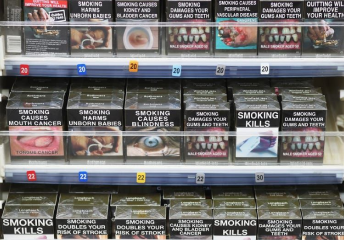
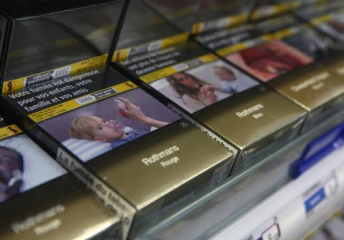
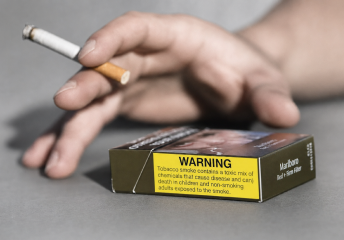
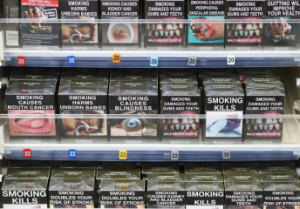
This is the one I’d check before anything else, because it’s the only test that’s actually black-and-white. Every cigarette pack sold legally in Australia must display standardised olive-brown plain packaging with large graphic health warnings under the Public Health (Tobacco and Other Products) Act 2023. There’s no version of “Australian-compliant but still has the red-and-white branding” — that combination doesn’t legally exist.
What to actually look for in the listing photo:
- Olive-brown (often described as “drab dark brown”) background colour — not red, not white
- A large graphic health warning covering most of the front and back
- The word “Marlboro” in small, plain text — not the stylised logo
Why this one matters more than the others: it’s the only check you can do before you’ve spent any money, just from the listing photo. If the photo shows classic red-and-white Marlboro packaging, you already have your answer — you don’t need to get to checks 2, 3, or 4 at all.
Price — A Useful Early Warning, Not Proof Either Way
If a listing is priced well below what supermarkets or established retailers charge for the same pack size, that’s worth pausing on — particularly from a seller you haven’t bought from before. I wouldn’t treat this as confirmation of anything by itself, though. Genuine retailers occasionally run promotions, and a slightly lower price doesn’t automatically mean a fake. What I’d actually do is treat an unusually low price as a prompt to go back and check #1 more carefully, not as a red flag on its own.
A rough sanity check: if a single pack is priced at roughly half what major supermarkets charge, that gap is large enough to be worth a second look at the packaging photo before you commit.
Seal and Wrapping Quality — Useful, But Only Once It's Already in Your Hands
This one’s honestly less useful than people think, because you can only check it after the product has arrived — by which point you’ve already paid. Genuine packs have a tightly applied cellophane seal with a clean pull-tab. Reports of counterfeit Marlboro product have noted loose or misaligned wrapping in some cases.
I’d treat this as a confirmation check, not a prevention check. If everything else looked fine (compliant packaging, reasonable price, established seller) but the seal looks off when it arrives, that’s worth raising with the seller directly rather than assuming the worst — production batches do vary slightly even on genuine stock.
Print Quality — The Hardest One to Use, and the Least Reliable Alone
This is the check I’d put last, because it requires something to compare against, and most buyers don’t have a “known genuine” pack sitting next to the one they’re questioning. Genuine packaging has consistent, evenly raised printing. If you do have a previous pack to compare, look at the sharpness of the text and whether the printing sits flush — but on its own, without a comparison point, this tells you almost nothing.
The honest limitation: a well-made counterfeit can pass checks 3 and 4 on a casual inspection, much as visual branding alone can mislead in other contexts where Marlboro logos were sometimes hidden or replaced by another sign because of advertising restrictions in some countries. Neither of these two checks is something I’d rely on as a first or only line of defence.
Because Marlboro is sold through Australia’s standard legal supply chain — supermarkets, convenience stores, and licensed tobacconists — most buyers won’t encounter counterfeit product through those channels. The risk increases mainly with unfamiliar online sellers or significantly discounted listings.
A few practical checks, based on known counterfeit indicators reported by consumers and brand-protection sources:

Where to Buy Marlboro Gold in Australia Online?
Marlboro Gold is available through more channels than most imported cigarette brands.
For single packs, supermarkets (Coles, Woolworths) and convenience stores are typically the most direct option, with pricing set independently by each retailer.
For cartons (10 Packets x 20’s), licensed online retailers are usually more practical. Local Tobacconist AU stocks Marlboro Gold cartons with Australia-wide delivery — check the Marlboro cigarettes for current stock and pricing.
Whichever channel you use: confirm the pack size and format before comparing prices, check that any pictured packaging matches Australian plain packaging requirements, and if buying online from an unfamiliar seller, check for clear contact details and delivery information before ordering.

Frequently Asked Questions
Where to Buy Marlboro Gold Near Me
Marlboro Gold is more widely available than most imported cigarette brands in Australia for adults interested in finding nearby stock, and this section is informational only. Major supermarkets and convenience stores stock single packs in most areas, which makes it one of the more accessible cigarette products for buyers looking for a nearby physical retailer. For cartons, online retailers with Australia-wide delivery are typically more practical than searching for a physical tobacconist that stocks carton quantities.
How many mg is Marlboro Gold?
Published figures for Marlboro Gold are lower than Marlboro Red across both tar and nicotine, though exact mg figures vary by market and production batch. For confirmed current specifications, check the packaging of the specific product you’re considering — figures printed on Australian packs reflect the version sold here.
Are Marlboro Golds menthol?
No. Marlboro Gold is a standard tobacco product, not a menthol variant. Menthol-related rules vary by market; in Europe, Marlboro Ice Blast was banned in the EU in May 2020. Menthol cigarettes are a separate product line within the broader Marlboro range.
Are Marlboro Lights and Marlboro Gold the same?
For practical purposes, yes. It is important to check the current Australian pack rather than assume older Marlboro Lights labelling or overseas packaging still applies. Marlboro Gold is the current name for what was sold as Marlboro Lights before Australia and other markets restricted “Light” and “Mild” labelling on tobacco packaging. The change was driven by regulation, not a confirmed product reformulation, though specifications can vary slightly by market and year.
How much are Marlboro Gold cigarettes?
Pricing varies by pack size and retailer. A standard pack contains 20 cigarettes, with some retailers also stocking a 25-pack format; a full carton (10 Packets x 20’s) contains 200 cigarettes. Supermarkets set their own pricing for single packs — for carton pricing, check the Marlboro category page at Local Tobacconist AU.
Is Marlboro Gold stronger than Red?
No. Based on published specifications, Marlboro Red carries higher tar and nicotine figures than Gold. Gold is the lower-specification reference point between the two.
How to spot fake Marlboro Gold?
Check that the packaging shown matches Australia’s standardised plain packaging requirements — branded colour packaging is not legally sold here. Beyond that, check seal and print quality against a pack you’ve bought before, and be cautious of pricing significantly below what supermarkets or established retailers charge. Also acknowledge that packaging details can change over time, so compare any listing image with current Australian plain-pack requirements before buying.
Summary
Marlboro Gold replaced the Marlboro Lights name in many markets following restrictions on “Light” and “Mild” labelling. However, the rename does not confirm that every market version or production batch is identical. Gold is not a menthol variant, while Marlboro Red remains the stronger-positioned reference point and a hallmark of the fuller end of the range. By 1998, Marlboro had become the leading cigarette brand in the U.S.
Some retailer descriptions claim its consistent quality, restrained tobacco scent and balanced flavour profile fits smokers seeking a milder option. Users may also describe the scent as less overwhelming than Red or say they enjoy its smoothness. This article is intended as general information for readers doing research on branded tobacco products, so these descriptions reflect individual taste, palate and perception, not objective quality, legal rights, or evidence that Marlboro Gold is safer. The brand also expanded globally across Europe, Asia, and Africa, with regional lineups that vary by country; in the Philippines, for example, Marlboro has five variants, including Classic and Gold.
Specifications can vary by country, production batch, and the information printed on a particular pack or box. Australian buyers should check standardised packaging, seller details, product format, delivery terms and secure checkout before ordering. Its rugged image and world profile were also reinforced by motorsport sponsorships, including Ferrari from 1973 and McLaren in Formula One from 1974 to 1996.

I am an industry researcher and the lead writer for Local Tobacconist AU, specializing in Australian retail tobacco trends, compliance, and product heritage. With years of hands-on experience navigating the complex retail landscape, I delivers authoritative, deeply researched guides to help consumers and retailers make informed choices in a rapidly changing market.

Local Tobacconist
Keep Up to Date with the Most Important News
Top New